








News Switzerland Appenzell Inner Rhodes: Party ends for easy corporate tax relief
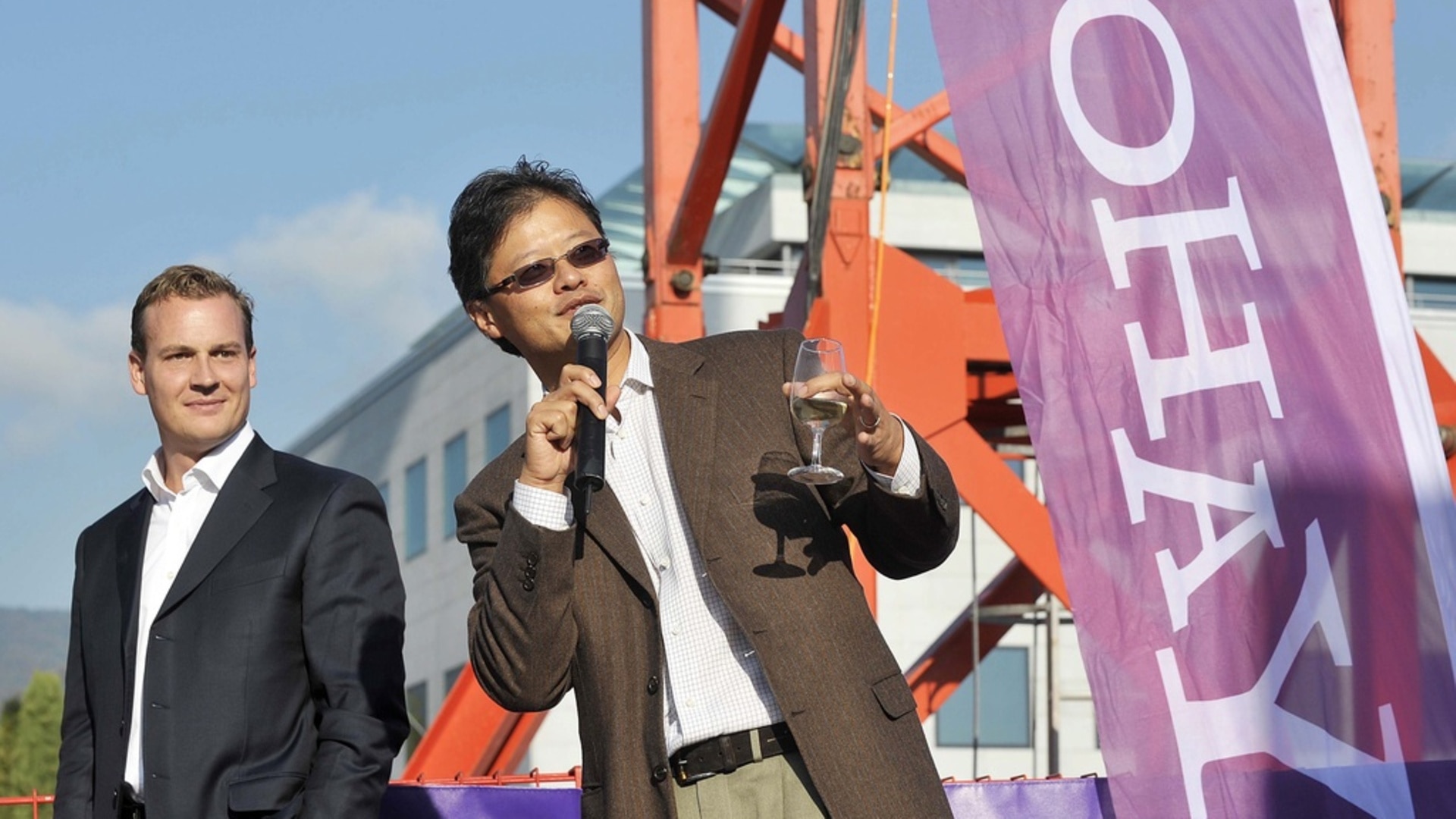
The Federal Audit Office has denounced the generous tax breaks granted to companies up to 2007 under the pretext of aiding disadvantaged regions. Granted for five years, these arrangements are set to be negotiated much more stringently in 2012. The issue caused consternation in French-speaking Switzerland earlier this month when media reports revealed, shortly before the audit office published its report into the matter, that SFr23 billion ($25 billion) in profit made by foreign companies was exempt from any tax. Seventy per cent of that was in the canton of Vaud. These figures are not new, having already emerged in the first report of the audit office in November 2010. In the meantime, however, the rules have changed. Until 2007 the “Bonny Decree” – named after its architect, a senior civil servant – was in force. The decree, which granted firms tax breaks in an effort to stimulate employment, was implemented in the late 1970s. It came about as a response to the watch industry crisis of the 1970s, when 60,000 jobs were lost in the Jura region. Under the decree, revamped in 1995, 28 per cent of the population live in an “economic redevelopment region”. This included most of French- and Italian-speaking Switzerland, the alpine regions and some areas in the east of the country. Pulling out the stops To benefit from tax relief, apart from opening an office in the right place the company also had to prove it was innovative and generated strong added value for the economy of the region. The tax relief applies across the board to communal, cantonal and federal taxes. The State Secretariat for Economic Affairs (Seco) was charged with examining the federal applications and negotiating with the canton if necessary; the economics minister had the last word. In 2007, the then Economics Minister Doris Leuthard signed off on 91 such tax relief provisions, twice the total of the previous year. Why? Because 2007 was the last year the Bonny Decree was in force. The cantons’ economic promotion agencies pulled out all the stops to attract as many companies as possible. But at what price? Published on February 10, the new audit office report throws light on practices which were hitherto discreet, to say the least. Rough estimate “We have pointed out the significant gaps in supervision,” Michel Huissoud from the Federal Audit Office told swissinfo.ch. “And in particular we have brought to attention that whole area, which was effectively a taboo subject. Because this figure of uncollected tax does not appear anywhere in the accounts.” One estimate shows that for 2007, the federal coffers alone missed out on more than SFr1 billion. “These estimates vary greatly,” according to Huissoud. “But what shocked us is that in the report of the Federal Tax Administration for parliament, the figure of SFr75 million was mentioned … which is nowhere near being accurate.” The audit office recommends therefore that these figures be published systematically. “For us these tax breaks are a form of economic promotion subsidy,” Huissoud said. “They should therefore be mentioned in the accounts, like other subsidies, so that parliament knows the effects of the policies it adopts.” Exception to the rule The audit office examined 32 examples in the four cantons that granted the most breaks: Vaud, Fribourg, Neuchâtel and Schaffhausen. “It’s not a representative sample. These are the cases which we judged most risky from a tax point of view,” Huissoud explained. Of those 32 companies, 26 were companies for production-related services, divided into four categories: “off-ground”, “window”, “implicated” and “integrated”. In short, most of these companies are primarily here for tax reasons, their staff are mainly imported and their investments are limited to office facilities. Apart from the eight in the integrated category, it’s a far cry from the criterion of “strong added value for the region”. And that’s not all. For those companies for production-related services, the Bonny Decree limits the rate of tax relief to 50 per cent. To go above that, the company is meant to be of “prime importance to the regional economy”. However, from 2005 to 2007 companies which created – or promised to create – at least 100 jobs were granted 100 per cent tax relief. The exception became the rule. So it was that Vaud attracted such prizes as the European headquarters of the internet giant Yahoo!, which promised to create 350 jobs – a number which has now shrunk to 100, of which just six to ten per cent will go to Swiss workers. Or Vale, the mining multinational based in Brazil, from which the Brazilian state is seeking $5.6 billion in unpaid taxes and which is only in Switzerland to reduce its taxable profit through creative accounting. According to the 24 Heures newspaper, Vale got tax relief of 80 per cent from federal taxes and 100 per cent for communal and cantonal taxes. A bit much to take for the Federal Tax Administration which has just brought the case before a Vaud court. Tightening grip Attacked from all sides, the head of finance for the canton of Vaud, Pascal Broulis, has recently been hitting back in the press. He denies allegations from his colleagues in other cantons of unfair competition, arguing it was a case of “intelligent management”. He reminds critics that the policy brought in 63 new companies, SF1.8 billion in investment, 4,663 jobs and SFr500 million in taxes, none of which would exist without these tax breaks. The audit office report is less upbeat: taking the 2008 figures and considering the effects of these tax breaks on the determination of the equal distribution between cantons, ten of the 32 companies examined cost the cantons and communes that welcomed them more than they contributed to them. Even if the Bonny Decree is buried and replaced by a new regional policy with much fewer special zones, its effects will continue to be felt until 2017. Also, 2012 is the year that businesses that were awarded tax breaks in 2007 will have their applications for the next five years re-examined. Will the conditions be verified more strictly? The audit office is calling for a strengthening of the supervisory role of Seco, which has already said it has taken appropriate measures. “For us it’s clear that Seco is listening and that the applications will be considered in a much more serious way than when they were first granted,” Huissoud warned. Context Germany and Britain have been campaigning for years for Switzerland to abolish tax regimes in certain cantons which are very favourable to holding companies. An ongoing row between Switzerland and the EU remains unresolved, although Switzerland has said it may cede some ground on the issue. The European Commission formally complained in 2007 that Swiss cantons were offering subsidies to foreign firms in the shape of tax breaks that violated a 1972 free trade agreement. Switzerland has always denied that cantons break the terms of the treaty by applying special tax advantages for the overseas earnings of foreign corporations. The flat-rate tax enjoyed by many rich foreigners is also a regular subject of criticism. Recently canton Vaud managed to stop the pharma giant Novartis closing its factory in Prangins by giving it a tax exemption, the conditions of which are not fully known. The current issue is not directly related to any of the above. Location Switzerland Low corporate tax rates, a high quality of life, a highly skilled workforce, excellent infrastructure, a central location and a well established financial centre are among the reasons that Switzerland is a magnet for foreign firms. Many foreign companies have set up headquarters or other operations in Switzerland in recent years, including Google, Philip Morris, Caterpillar, Chiquita, Ebay and Dow Chemicals. The numbers have been recently boosted by the arrival of reinsurance companies escaping a US tax crackdown on the Caribbean islands and commodities firms. Raw materials traders such as Transocean, Rosneft and Bashneft have either moved operations in the past few months or are said to be considering such a move. According to Ernst & Young, Neuchâtel has the highest effective combined cantonal and federal corporate tax rate of 24.5%. Voters were due to have decided on slashing those rates in half on April 3, but the process has been delayed by a court order. The lowest effective tax rate is in Appenzell Inner Rhodes (14%), while many cantons are thought to be considering moves to lower their rates further. Cantons also award tax breaks on the foreign derived earnings of many firms – a strategy that the EU claims is anti-competitive.
News Switzerland Appenzell Inner Rhodes: Cracks showing in business oasis Switzerland
A shortage of affordable homes and international schools, along with a prolonged row over tax, threatens to weaken Switzerland’s magnetic pull for foreign firms. Lured by low tax rates and a high standard of living, a steady stream of overseas companies have set up operations in Switzerland in recent years. But there are signs of growing discontent from new arrivals. Top of the grumble list is the astronomic rise in house prices in Geneva, Zurich and Zug – a trend that has already priced many locals out of the market, and threatens to do the same for foreign workers. “The new Eldorado has become even more of a magnet and there is a risk that this could result in a social crisis,” Emmanuel Fragnière of Geneva’s HEG School of Business Administration told swissinfo.ch earlier this month. “Politicians are very happy to collect the new taxes, but they need a coherent policy to promote the location that takes into account structural difficulties.” Problems are also showing up in Zug and in Rolle, situated between Geneva and Lausanne. Noise control “No one imagined what would happen with so many people from outside Switzerland coming here to work,” Rolle Social Democrat politician Patrick Bréchon told swissinfo.ch. “They are not really creating local jobs. The housing market is like a jungle. House prices have shot up unbelievably and infrastructure – transport, roads and schools – is really behind.” Local complaints have also been matched with anecdotal evidence of foreign workers finding it tough going in their newly adopted country. The British magazine, the Economist, interviewed newcomers complaining of boredom and a lack of places in international schools. “You need muscle to get kids in international schools,” said one financier named only as Alex. “Otherwise it’s a Swiss school, where your kids will find it hard to settle.” Others experienced problems adapting to stricter Swiss regulations on noise and refuse collection than they were used to at home. Geneva-based relocation expert Francois Micheloud acknowledged that the huge influx of foreign firms and workers had created some structural problems, made worse by slow planning and construction rules. Tax uncertainty But he firmly believed that solutions could be found to ease the pressures, such as developing rural areas north of Lausanne or in canton Vaud. “We are not like Monaco – a small piece of rock where you cannot build any more,” he told swissinfo.ch. “Bottlenecks will be resolved by companies spreading out to areas that are still within reach of Geneva airport.” Switzerland’s vaunted tax competitiveness is also coming under sustained pressure from the European Union. The Swiss authorities have made noises that the corporate tax system could be revamped to meet some EU demands, but nobody knows how this could be done. “Companies interested in relocation to Switzerland should know what the tax rules will be like in future,” tax expert Stephan Kuhn of Ernst & Young told swissinfo.ch. “They would not come to Switzerland if the tax system is unpredictable and subject to major increases.” British-based companies, on the other hand, received a boost from Wednesday’s budget announcement that tax rates would be cut by two per cent in the next three years, a full percentage point more than previously thought. Incentives remain This prompted advertising giant WPP to consider relocating its tax base back to Britain from Ireland, where it had recently moved. In a recent interview in the British Observer newspaper, the chief executive of pharmaceutical giant GlaxoSmithKline, Andrew Witty, chided British firms for heading to cheaper tax regimes, saying they had broken their bond with society. “We could go, in theory, anywhere for a low tax rate. But first of all, how do you know that country isn't going to change its tax rate in ten minutes?” he said. However, Britain’s new 23 per cent rate would still be higher than the Swiss burden. Depending on where a company is based, combined effective federal and cantonal rates vary between 24.5 and 14 per cent. Francois Micheloud is convinced that the relocation of foreign firms to Switzerland will continue “for many years to come”. “The incentives for companies to come to Switzerland remain the same as before: competitive tax rates, excellent transport links, a central European location, access to a highly skilled work force, clusters of business competence and flexible labour laws,” he told swissinfo.ch. “And Switzerland is still a delightful place in which to live.” Location Switzerland Low corporate tax rates, a high quality of life, a highly skilled workforce, excellent infrastructure, a central location and a well established financial centre are among the reasons that Switzerland is a magnet for foreign firms. Many foreign companies have set up headquarters or other operations in Switzerland in recent years, including Google, Philip Morris, Caterpillar, Chiquita, Ebay and Dow Chemicals. The numbers have been recently boosted by the arrival of reinsurance companies escaping a United States tax crackdown on the Caribbean islands and commodities firms. Raw materials traders such as Transocean, Rosneft and Bashneft have either moved operations in the past few months or are said to be considering such a move. According to Ernst & Young, Neuchatel has the highest effective combined cantonal and federal corporate tax rate of 24.5%. Voters were due to have decided on slashing those rates in half next month, but the process has been delayed by a court order. The lowest effective tax rate is in Appenzell Inner Rhodes (14%), while many cantons are thought to be considering moves to lower their rates further. Cantons also award tax breaks on the foreign derived earnings of many firms – a strategy that the EU claims is anti-competitive. An ongoing row between Switzerland and the EU remains unresolved, although Switzerland has said it may cede some ground on the issue. One potential way around the problem would be for cantons to scrap the distinction between foreign and domestic derived earnings, but make up for this by lowering the tax rate across the board. Neuchâtel was planning such a move.
News Switzerland Appenzell Inner Rhodes: Switzerland - 2021 in numbers: face coverings, floods, sugar and salt
Swiss residents may import up to 50kg of ... and four women from canton Appenzell Inner Rhodes who remember casting their first vote on April 28, 1991. Another vote that attracted international ...

